
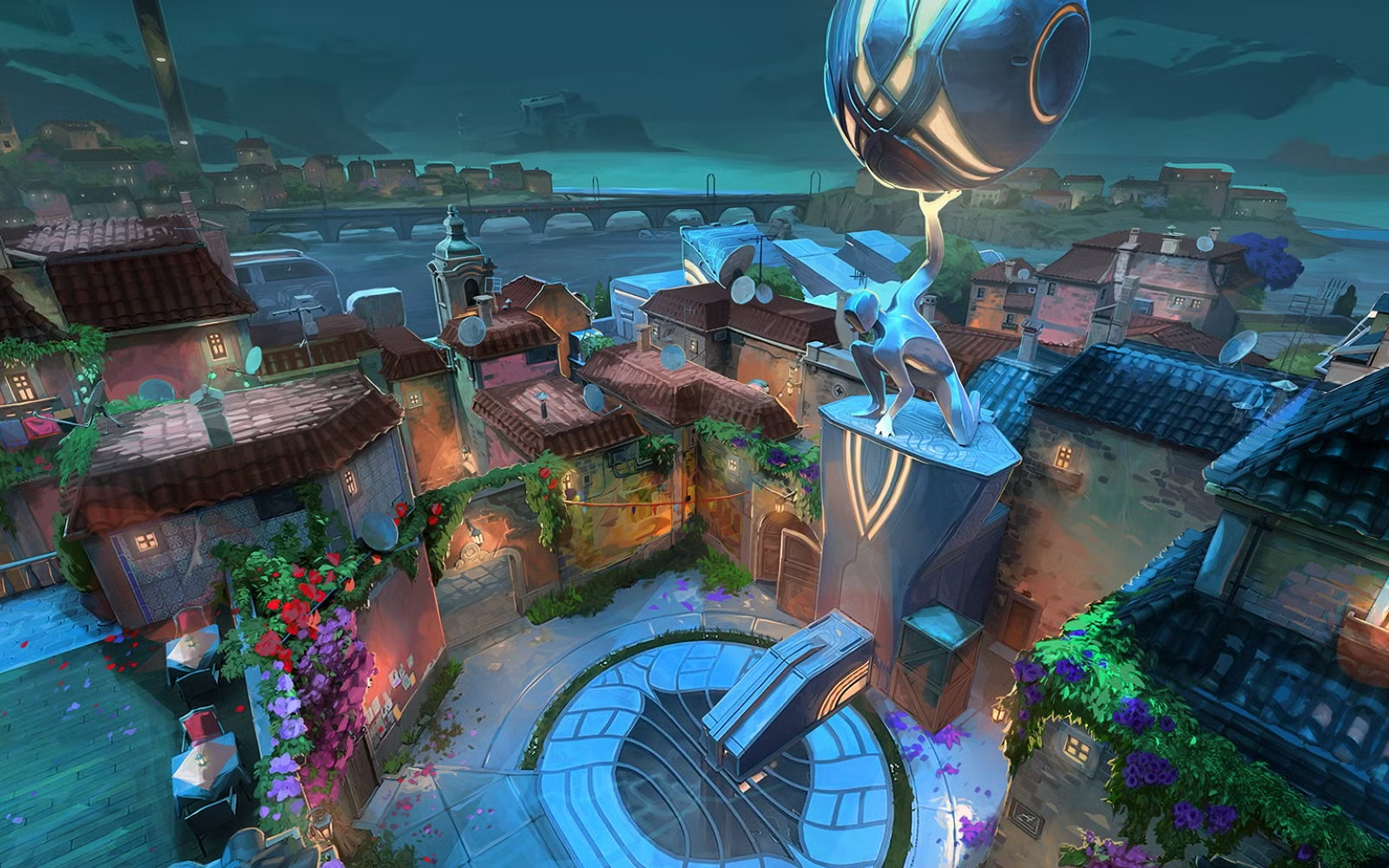
In the realm of online gaming, few titles have captured the inventiveness quite like valorant.On the surface, it appears to be yet another tactical shooter, a vibrant tapestry woven with the threads of myriad characters, each armed with unique abilities. But beneath this pixelated façade lies a complex geopolitical landscape that mirrors our own fractured world. As players drop into lush maps inspired by real-world locales and embody agents whose backstories resonate with themes of power, intrigue, and conflict, we must ask: what do these narratives tell us about our current geopolitical climate?
In this exploration, we will dissect the intricate layers of Valorant’s world, highlighting how the game’s richly developed characters and environments serve as metaphors for global tensions. From geopolitical rivalries to the echoes of colonialism, the narratives stitched within the game’s framework reveal not just the struggles for dominance among its agents, but also a reflection of humanity’s enduring quests for identity, justice, and survival. As we delve deeper into this intriguing intersection of gaming and global politics, we invite you to critically engage with the implications of Valorant’s world, challenging the boundaries between entertainment and reality—an invitation to see not just a game, but a mirror reflecting the complexities of our own geopolitical landscape.
The Fractured Worlds: Understanding the Nations and Factions of Valorant
In the complex tapestry of Valorant’s universe, nations and factions are not merely names on a map; they embody distinct philosophies, weaponry, and combat styles that influence every match. The two prevailing powers,Valorant and the Kingdom,represent the duality of order and chaos,each calling upon agents who epitomize their respective ideologies. Valorant serves as a protector, a coalition striving to maintain peace against onslaughts from shadowy forces. In contrast, the Kingdom operates under a less scrupulous banner, driven by corporate interests and ruthless ambition. Players select their agents, not just for their abilities, but as a reflection of their alignment with these broader geopolitical tensions.
Delving deeper,we find a multitude of factions and secondary alliances that enrich the narrative.Each faction brings its unique flair to the battlefield, shaped by cultural backgrounds and historical contexts. their allegiances can shift as easily as the tides of war, creating a precarious balance that players must navigate. Below is a concise overview of select factions and their defining traits:
| Faction | Key Attributes | Representative Agents |
|---|---|---|
| Valorant | Peacekeepers, Tactical Support | Phoenix, Cypher |
| Kingdom | Corporate Greed, Advanced Technology | Sage, Jett |
| Raze’s Crew | Explosives, Chaos | Raze |
| Other Minor Factions | Varied Motives, Diverse Skillsets | Killjoy, Sova |
Power Dynamics in Play: Analyzing the Geopolitical Tensions Among Agents
The tension between the diverse factions in Valorant’s world is both palpable and complex, influenced by historical grievances and the quest for dominance. As agents traverse the battlefield, they embody the clashing ideologies that further complicate their allegiances. From Radiant who strive to protect the realms, to the shadowy motives of the Valorant Protocol, the struggle for power plays out not only in combat but in strategies and alliances forged in chaos. Whether it’s the technological prowess of the Riot scientists or the mystical abilities of the mystics, each faction’s desire for supremacy feeds into an overarching narrative steeped in betrayal and ambition.
examining the psychological undercurrents among these factions reveals a rich tapestry of motivations at play. The agents are not mere soldiers; they are representatives of their ideology, shaped by their circumstances and personal histories. Here are a few influential factions reshaping the power dynamics:
- Radiants: Guardians of human potential, pushing for a world where abilities uplift rather than subdue.
- Protocol Agents: Operatives of the Valorant organization, frequently enough caught between duty and ethical dilemmas.
- Shadow Agents: Employ underhanded tactics that challenge the very fabric of what is considered honorable in conflict.
Each agent’s abilities reflect their faction’s ethos, while ongoing skirmishes reveal deeper political strategies. The map of power continues to shift, as alliances form and fracture along the lines of ideology and ambition—a grim reminder that in this chaotic theater, the stakes are life and death, and control over the very essence of their world.
Strategies for Engagement: Lessons from Valorant’s Global Conflicts
In the dynamic landscape of Valorant, engagement is not merely a tactical choice; it is a strategic necessity shaped by the intricate conflicts that define its world. Teams can learn invaluable lessons from how regional factions form alliances and respond to crises.Understanding the underlying motivations driving these factions allows players to anticipate moves not just from opponents, but also from potential allies. The core of effective engagement lies in recognizing the patterns of behavior that arise from geopolitical tensions, emphasizing the need for continuous adaptation and situational awareness. With every skirmish bearing the weight of historical context, players must decipher the true intentions behind each action—whether its a bold offensive or a calculated retreat—resulting in a richer gameplay experience rooted in strategy rather than mere reflexes.
Collaboration and communication are paramount, as evident from the varied alliances that fluctuate throughout the game’s narrative. Key strategies for effective engagement include:
- Leveraging Clear Communication: Establishing open lines of dialog to align on objectives ensures that all team members are on the same page.
- Building Trust with Allies: Forging relationships with other players not only enhances teamwork but also allows for shared intelligence on enemy movements.
- Strategic Resource allocation: Prioritizing how to deploy available agents and abilities in response to changing conflict dynamics can tip the scales in critical moments.
| Engagement Strategy | Impact |
|---|---|
| Communication | Increases cohesion, minimizes errors |
| Trust | Enhances collaboration, leads to surprises |
| Resource Management | Maximizes team potential, ensures resilience |
Future Scenarios: Predicting the Evolution of Valorant’s Geopolitical Landscape
The world of Valorant is a constantly evolving tapestry woven with threads of conflict, power struggles, and geopolitical intrigue. As the Radiants and the Sentinels grapple for control, we can foresee various scenarios shaping the landscape of this universe. Notably, key factions will emerge as pivotal players, influencing the outcome of territorial disputes and ideological rivalries.Future conflicts may revolve around the highly coveted Resonance Crystals,which serve both as resources and catalysts for power. This could lead to alliances shifting like sand, with former foes coming together to combat a greater threat, while new enemies rise, challenging existing power balances.
moreover, the interplay of technology and magic will further complicate the geopolitical dynamics. The integration of advanced technology could see the emergence of unstable alliances, as factions vie for supremacy in the arms race for control over these potent forces. Consider the following possibilities:
- technological Arms Race: Factions racing to harness AI-driven tactics for combat supremacy.
- resource Scarcity: Heightened conflict due to dwindling access to Resonance Crystals, pushing factions to desperation.
- Ideological Wars: Emerging cult-like factions challenging the status quo, promoting radical ideologies around the nature of power.
As we delve into the intricacies of these potential futures, we can expect a rise in espionage and subterfuge as factions attempt to outmaneuver one another while maintaining their public personas. This shadowplay will shape alliances in unpredictable ways,making each decision critical in the ongoing saga of Valorant’s geopolitical narrative.
The Conclusion
As we draw the curtain on our exploration of the intricate geopolitical landscape of Valorant’s world, it becomes evident that the game transcends mere entertainment, operating as a microcosm of our own global tensions and alliances. The melding of diverse characters, each representative of their distinct cultures and ideologies, invites players to engage in a dialogue about power dynamics and ethical complexities.
Valorant’s narrative may be rooted in a fictional realm,but its reflections on real-world issues resonate powerfully with players who recognize that the conflicts and alliances forged within the game mirror those that shape our reality. As you navigate the tactical decisions on the battlefield, consider the underlying implications of trust, betrayal, and ambition that fuel both your gameplay and the broader narrative canvas.
In a time where our world seems as fragmented and contested as the agents within Valorant, the lessons gleaned from its geopolitical tapestry challenge us to scrutinize our own positions and understandings. Whether through strategic gameplay or the socio-political narratives these characters embody, Valorant serves as a potent reminder that every action reverberates beyond the immediate arena, echoing in the corridors of power and influence that govern our real lives.
As we step back from the virtual stage, let us carry forward this newfound awareness and critical lens, enriching not only our gaming experiences but also our understanding of the intricate threads that bind us in the ever-evolving global narrative. The world of Valorant is a call to action—become not just a player, but also a keen observer of the geopolitical dialogues that shape our fate.


Leave a Reply