
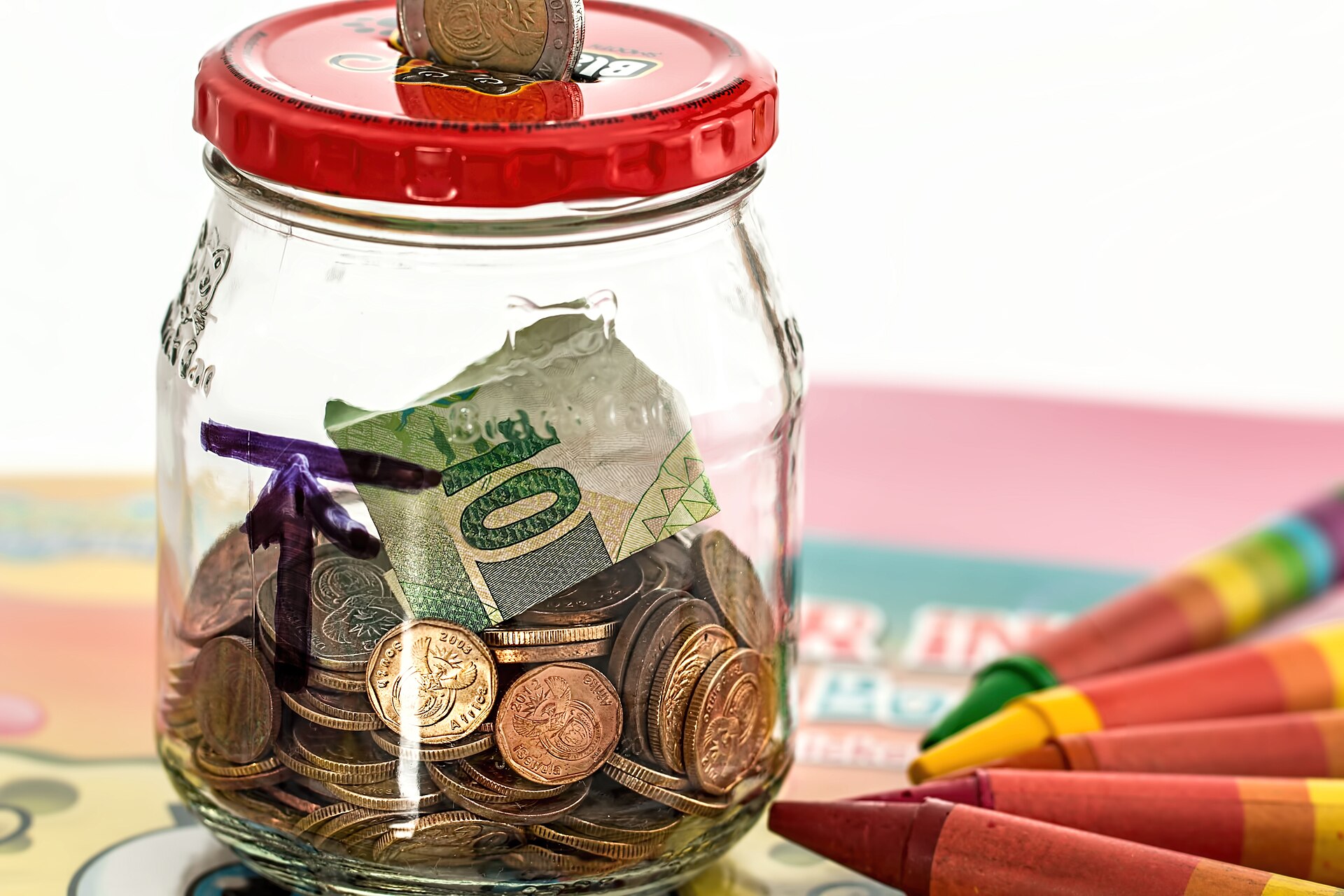
An emergency fund is money you set aside for costs you did not plan for: a car repair, an uncovered medical bill, a broken furnace, or a stretch without a paycheck. Its job is simple. It lets you pay for a surprise without reaching for a credit card, a high-cost loan, or your retirement account. That one buffer can be the difference between a bad month and a debt problem that lasts for years.
The two questions people ask most are how much to save and where to put it. There is no single right number, and government consumer agencies frame it differently. This guide walks through the common benchmarks, shows you how to calculate a target from your own spending, compares the places you can park the money, and offers practical ways to build the fund even on a tight budget.

What an Emergency Fund Is (and Is Not)
The Consumer Financial Protection Bureau (CFPB) describes an emergency fund as cash reserved for unplanned expenses or financial emergencies, separate from the money you use for regular monthly bills. Examples it lists include car repairs, home repairs, medical bills, and a loss of income.
It helps to be clear about what the fund is not for:
- Not for predictable costs. Annual insurance premiums, holiday gifts, or back-to-school shopping are known in advance. Those are better handled with separate savings goals, often called sinking funds.
- Not an investment account. The goal is stability and quick access, not growth. A balance that can drop in value when you need it most defeats the purpose.
- Not a wish-list fund. A sale on a new TV is not an emergency. Writing down your own definition of an emergency before you need the money makes it easier to say no later.
The CFPB points out that without savings, even a small shock can push people into credit card debt or loans that are hard to repay. If you are already carrying balances, our guide on strategies to avoid credit card debt pairs well with building a cash cushion.
How Much You Need: The Common Benchmarks
Official sources do not agree on one figure, which is a useful reminder that the right size depends on your situation:
- FINRA, the brokerage industry regulator, suggests aiming for the equivalent of three to six months of living expenses, and notes that people with variable income or specialized careers may need a larger cushion.
- The FDIC, in its January 2025 consumer newsletter, says experts generally recommend at least six months of living expenses.
- The CFPB does not set a fixed number. It suggests looking at the unexpected expenses you have actually faced, what they cost, and setting a goal from there. Its “Your Money, Your Goals” savings booklet suggests that you could start with a goal of $500 and adjust based on your needs.
A practical way to reconcile these is to think in tiers. First, build a small starter fund that covers a typical surprise bill. Next, work toward one month of essential expenses. Then keep going toward three to six months, or more if your income is unpredictable.
Factors that push your target higher or lower
- Income stability. Commission, gig, seasonal, or self-employment income usually calls for a bigger reserve.
- Household setup. A two-income household where either income covers the basics may need less than a single-income household with dependents.
- Job market for your field. If finding a similar job could take longer, plan for more months.
- Insurance deductibles. High health, auto, or home insurance deductibles are classic emergency expenses. Your fund should at least cover the largest one you might realistically face.
- Age and condition of big-ticket items. An older car or an aging roof raises the odds of a large repair bill.
How to Calculate Your Personal Target
Base the target on essential monthly expenses, not total spending. In a real emergency, you would cut dining out, subscriptions, and travel. What remains is the number that matters.
- List must-pay costs: rent or mortgage, utilities, groceries, insurance premiums, transportation, minimum debt payments, child care, and essential medical costs.
- Add them up to get one month of essentials.
- Multiply by the number of months that fits your risk level.
- Compare the result with your largest insurance deductible and make sure the fund covers at least that.
Hypothetical example: Jordan’s essential costs are $1,400 for rent, $180 for utilities, $450 for groceries, $220 for insurance, $300 for transportation, and $150 for minimum debt payments. That totals $2,700 a month.
| Coverage level | Calculation | Target |
|---|---|---|
| Starter fund | Fixed starter goal | $500 |
| One month | $2,700 x 1 | $2,700 |
| Three months | $2,700 x 3 | $8,100 |
| Six months | $2,700 x 6 | $16,200 |
If Jordan’s income is steady and a partner also earns, three months may be a reasonable goal. If Jordan freelances, six months or more could make sense.
Where to Keep Your Emergency Fund
The CFPB says an emergency fund should be safe, accessible, and kept somewhere you will not be tempted to use it for everyday spending. FINRA adds that it should be in a liquid, interest-bearing account. Here is how the main options compare.
| Option | Federally insured? | Access | Things to watch |
|---|---|---|---|
| Savings account (bank or credit union) | Yes, FDIC or NCUA, up to limits | Usually quick transfers | Low rates at some institutions; minimum balance fees |
| Money market deposit account | Yes, FDIC or NCUA, up to limits | Often checks or debit card, with some limits | Minimum balance requirements |
| Certificate of deposit (CD) | Yes, FDIC or NCUA, up to limits | Locked until maturity | Early withdrawal penalties |
| Money market mutual fund | No, it is an investment | Usually a few days to sell and transfer | Can lose value; not a bank deposit |
| Cash at home | No | Immediate | Theft, loss, fire; earns nothing |
Why deposit insurance matters
According to the FDIC, the standard deposit insurance amount is $250,000 per depositor, per insured bank, for each account ownership category. Checking, savings, money market deposit accounts, and CDs are covered. Stocks, bonds, mutual funds, crypto assets, and annuities are not, even if you buy them through a bank. Credit unions have parallel protection: the NCUA insures member deposits such as share savings and share certificates up to $250,000 for a single-ownership account.
Investor.gov warns that money market funds are not guaranteed by the FDIC and that you could lose money in them. The CFPB also stresses that a money market account at a bank or credit union is a different product from a money market fund at a brokerage. Read the account name carefully.
A simple setup that works for many people
Keep the fund in a separate savings or money market deposit account, ideally not linked to the debit card you use daily. If your balance grows large, some people move a portion they are unlikely to need right away into short-term CDs, accepting that early withdrawal could trigger a penalty. The FDIC notes that CDs usually carry such a penalty, so check the terms first.
How to Build the Fund Step by Step
The CFPB, FDIC, and FINRA all emphasize the same idea: start where you are and save regularly, even in small amounts.
- Automate it. Schedule a recurring transfer from checking to savings on payday. The FDIC gives the example of $20 per biweekly paycheck adding up to $520 a year before interest.
- Split your direct deposit. If your employer allows it, send a fixed amount straight to savings so it never lands in checking.
- Save windfalls. Tax refunds, bonuses, and cash gifts can jump-start the balance.
- Trim recurring costs. Cancel or downgrade services you rarely use and redirect the savings.
- Line up bill due dates. The CFPB suggests asking creditors to shift due dates so they fit your pay schedule, which can free up room to save.
Hypothetical example: If you save $150 every two weeks, you would set aside $3,900 over 26 paychecks. Add a $1,000 tax refund and you would have $4,900 in about a year, before any interest.
Emergency Fund vs. Paying Down Debt
FINRA notes that if you have high-interest debt, you will need to decide how to divide extra money between paying it down and building savings. Many people find a middle path useful: build a small starter fund first so a surprise bill does not land on a credit card, then direct more money to high-interest balances while continuing a smaller automatic savings transfer. Without any cushion, the next emergency often undoes your debt progress. Understanding how loan interest rates work can help you see what each balance really costs.
Using and Refilling the Fund
When a real emergency happens, use the fund. That is what it is for. The CFPB encourages people to tap it rather than take on high-cost credit, and both the CFPB and FINRA recommend rebuilding it afterward. Restart your automatic transfer, or temporarily increase it, until the balance is back to target. Revisit your target once a year or after a major life change such as a new job, a move, or a new child.
Frequently Asked Questions
Is three months of expenses enough?
It can be for households with stable income and good insurance. FINRA suggests three to six months, and the FDIC points to at least six. If your income varies or you are the sole earner, leaning toward the higher end adds protection.
Should I keep my emergency fund at the same bank as my checking?
Same-bank transfers are often faster, but a separate institution can reduce the temptation to dip in. Either way, confirm the account is federally insured and that you can move money quickly.
Can I invest my emergency fund to earn more?
Investments such as stocks or mutual funds can lose value and are not covered by deposit insurance. Because you may need the money suddenly, most guidance favors insured, liquid deposit accounts.
Is interest on my emergency savings taxable?
Generally yes. The IRS lists interest on bank accounts, money market accounts, and CDs as taxable interest, and you may receive Form 1099-INT if you earn $10 or more.
Bottom Line
An emergency fund is your first line of defense against debt. Base the size on your essential monthly costs and your income stability, starting with a small goal and building toward three to six months. Keep it in a federally insured, easy-to-reach account that is separate from everyday spending, automate contributions, and refill it after you use it. If a surprise expense is bigger than your fund, compare options carefully before borrowing; our beginner’s guide to personal loans explains what to look for.
Sources
- Consumer Financial Protection Bureau – An essential guide to building an emergency fund
- Consumer Financial Protection Bureau – Building your savings? Start with small goals
- FINRA – Financial Foundations: Start an Emergency Fund
- FDIC – Saving for the Unexpected and Your Future
- FDIC – Deposit Insurance At A Glance
- NCUA – Share Insurance Coverage
- Investor.gov – Money Market Funds
- Consumer Financial Protection Bureau – What is a money market account?
- IRS – Topic no. 403, Interest received
This article is for general information only and is not financial advice. See our Disclaimer.